Author: Ash

  • Welcome


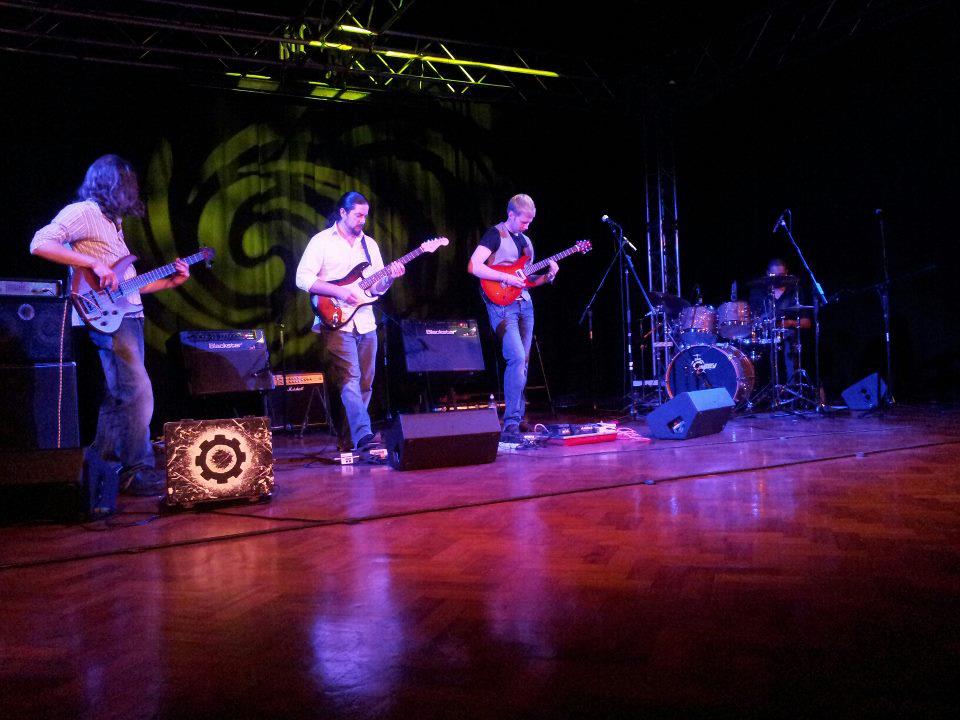
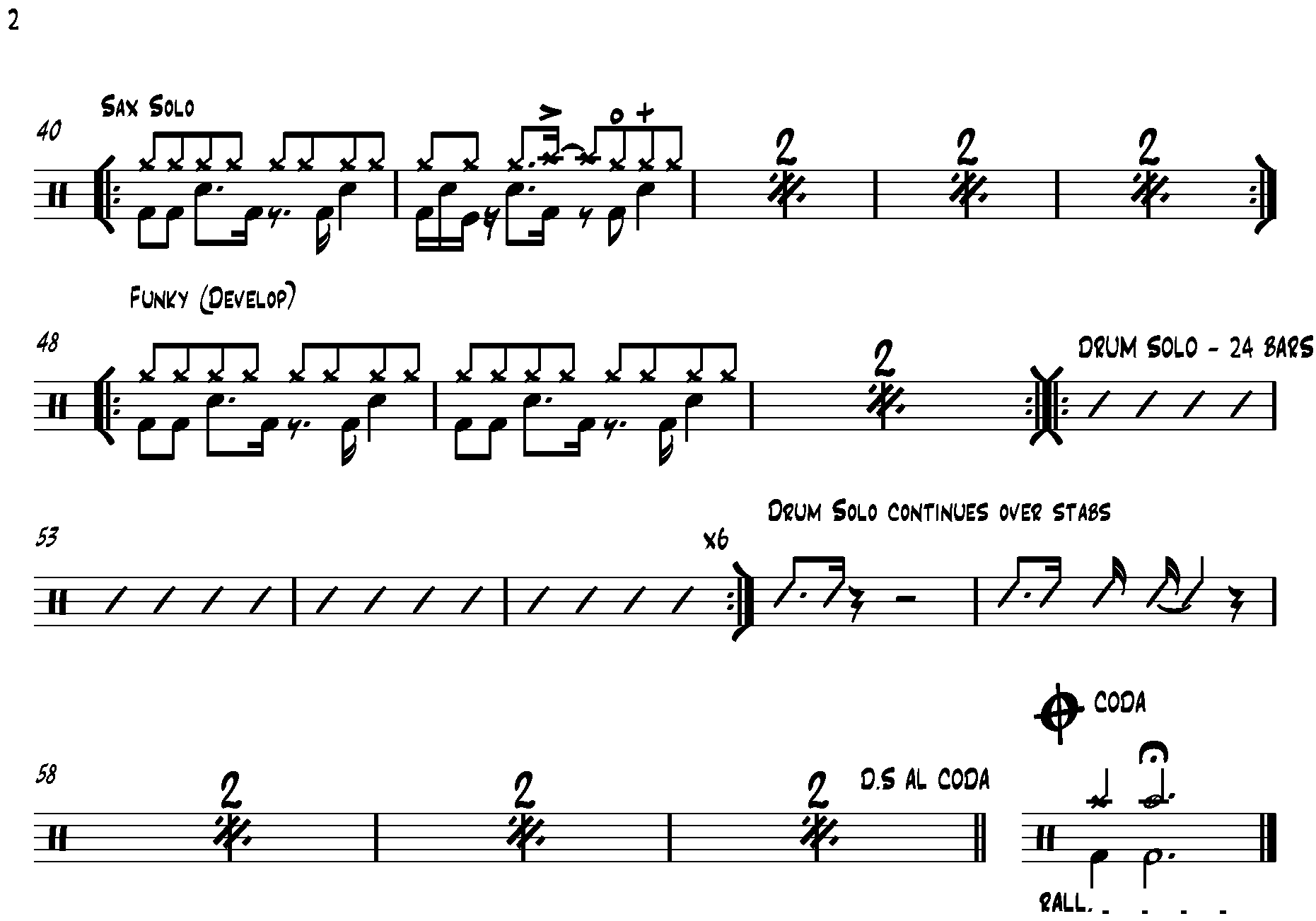
    Hi, I’m Ash Turner. I’m a UK (Chester/North West) based Drummer / Percussionist & Musician, available for shows and sessions. I perform in various cover and original outfits, also keeping busy with a lot of freelance dep work and recording sessions. I’m versatile with and enjoy playing in many styles of music and work well with music notation and charts – examples of my notation can be found on my transcriptions page. Airplay credits (recorded & live sessions) include SKY Television, BBC Radio 6Music, BBC Radio Wales, BBC Radio Merseyside, Amazing Radio, Radio Clwyd and more.

    Bio

    I got into music at the age of 7 when took piano and keyboard lessons, soon followed by guitar. I then began to play drums in my early teen years and developed a true passion for all things rhythmical. By my late teens, I had gained a lot of experience performing and touring (nationally and internationally) and teaching many students with varying degrees of ability.

    I moved to the North West of England when I was 18 to complete an Undergraduate and then a Master’s Degree in Music at University of Chester. During this time I developed my technical ability and gained a lot of recording and playing experience.

    Below you will find various recordings, videos and transcriptions I’ve put together, along with a blog I started as part of my Master’s Degree to log and track some of my thoughts and findings.

  • Paul Simon (Steve Gadd) ‘Late In The Evening’

    I wanted to start the new year looking at different drum grooves. I’ll be updating new grooves and ideas here on a regular basis.

    Since completing the MA course, I’ve taken a little time out to go over some of the grooves that really helped to develop my playing and tried to expand on these. One of the grooves I wanted to share today is from a Paul Simon track called ‘Late In The Evening’, featuring legendary drummer Steve Gadd.

    Below is the groove. CLICK HERE for a .PDF version.

    Late In The Evening - Drum

    During my MA, my drum teacher brought this track to my attention after I mentioned to him that I was interested in exploring world and Latin music a little more. It was a fantastic place to begin on the journey down the world route, and it also helped tremendously with independence. Furthermore, it is a very versatile groove which can be used and applied in various musical scenarios.

    Ok, so here’s how it sounds:

    It may sound obvious, but the key to this one is to start very slow and play it right. I remember getting a rough idea and then trying to speed off with it – each time the groove would fall apart or stutter. The right hand stays on the rim of the floor tom, and the left hand alternates between the floor tom and the high tom. Bass drum and pedal hi-hat are on each beat in the bar.

    I just worked on the hands first of all, and once I had the pattern down I added the bass drum and hi-hat chick on each beat. Muscle memory should eventually help retain the pattern with enough practise and at that stage the groove can be sped up without compromising the sticking clarity or feel.

    The groove itself has a linear feel and the first beat of the groove is the only time that both the right and left hands play together. If you keep this in mind, and remember that the right hand stays only on the rim, it should seem a little easier when trying to piece it all together.

    A final few pointers on this one – The drum solo is the same as the verse groove but the right hand moves to the ride bell instead. Gadd will also fill over the toms from time to time keeping the same sticking pattern, but moving both hands over the toms.

    Anyway! well worth learning, lots of fun to play so do have a go. Keep it slow to begin with, and good luck!

  • Spectrum Videos

    Since completing the project, we have continued to work on material, new and old. We’ve been promotion the band a lot online and even secured a few gigs. We also recorded a couple of videos just for fun and promotion. Here they are, ‘Tuken’ and ‘Buenos Aires’

    Tuken

    Buenos Aires

  • Final Recital Complete

    I had the final performance last week, and I have just completed the reflective portfolio. Just a viva left to go and then that’s it! It has been a great experience and I have discovered so much more about performance and my own ability. This final project has really made me appreciate the importance of continuity within a band. Rehearsing regularly with the same set of musicians allowed me to learn their expressions, for example, when they want to exit a solo, what they want to accomplish dynamically, and just generally where they want to go in the music. As a result the changes within the songs sounded smoother and I felt a lot more relaxed. I believe that my technique has improved, along with my ability to improvise. There is still a long way to go in improving my ability as a musician. We have every intention in continuing rehearsals with this outfit and hopefully the benefits (and fun) will continue!

  • Night Splash

    CAB – ‘Night Splash’

    ‘Night Splash’ was one of my favourites. It is a very technical track – odd time signatures, odd rhythms and some of Dennis Chamber’s signature ghost-note-fusion drum grooves. This was a real test for us as a band in rehearsal and we had to start it at a very slow speed. As the rehearsals progressed, we would gradually take the tempo up until we got it at the correct speed and in time. We would spend time just running the head section over, and then we would just run the alternating solo sections over. We would sometimes spend 15-20 minutes, just soloing for four bars each, which was exhausting, but did bring some really creative ideas to the table. This kind of rehearsing allowed us to get to grips with the way we all improvised and exited solo sections. It did help us switch off and try and just improvise. I found that after so many cycles, you are constantly thinking ‘I’ve got 12 bars to think; what am I going to do next?’. It was quite interesting, as for me I found that once I thought that I had exhausted my ideas, I would land in the solo section and just have to play whatever came to mind. Occasionally I would end up playing certain safety fills and licks that we all have to get out of trouble, but on other times I felt as close to truly improvising as I ever have done. The fact that we had all been rehearsing together for a good while also helped a great deal, as we were all less worried about making mistakes in front of each other and more interested in generating some musical ideas. There were so many benefits to learning and rehearsing ‘Night Splash’, and it is only looking back now that I can truly appreciate what we had done. When we played the track on the night, I felt that I was able to communicate the ideas that I wanted to, the head and grooves I felt were tight and sat well so I was very pleased.

  • Come and Get It

    Greg Howe – ‘Come and Get It’

    ‘Come and get it’ was quite a hard track for us to get together and it didn’t go as well on the night as it had done in previous rehearsals. Funnily enough, we had rehearsed this song more than a number of the other tracks. On the original, the drums were all programmed and as a result I had to adapt my parts slightly for acoustic drums. The rhythm parts were very mechanical, and there were a lot off ‘off beat’ rhythms with all of the different grooves. The rehearsal strategy for this once consisted of us breaking up the different sections and really rehearsing them over and over, piecing it together at the end.


  • Big Sur Moon, Whitewash, Crosswinds

    Buckethead – ‘Big Sur Moon’ / ‘Whitewash’ / Billy Cobham – ‘Crosswinds’

    This trio all started separately; there was never an initial intent to segue all three. ‘Big Sur Moon’ was a solo guitar track and it made sense that the mellow ending could fold into ‘Whitewash’. As for the ‘Whitewash’ to ‘Crosswinds’ segue, the two have the same drum and bass guitar groove, and are both in the same key. Throughout the three, I was keen to hold a solid groove and keep the tempo together. Throughout ‘Whitewash’ and ‘Crosswinds’, I was consciously watching each solo to raise and lower the dynamic with the solo where appropriate. By the time we got to ‘Crosswinds’, I tried to emulate the same solid groove that Billy Cobham does on the original. Even when the volume drops, the groove is still solid and unmoved. In preparation for this track, I listened to a lot of Cobham’s other songs, along with his work with Mahavishnu Orchestra and at the end of the track, I began to incorporate some of those fast signature Billy Cobham fills.

    [Update – 14/10/12]

    I really enjoyed performing this trio live on the night. I found that in the bass solo in ‘Crosswinds’, Oscar started using a delay pedal, creating some really great effects. I knew immediately that I had to keep the timing of that groove spot on; otherwise it could potentially fall apart. We began to push out in that solo bringing in ideas and influences from other Cobham and Mahavishnu Orchestra tracks.

  • E Minor Shuffle

    David Garfield – ‘E Minor Shuffle’ (Karizma version)

    ‘E Minor Shuffle’ was a lot of fun to rehearse and a lot of fun to perform. We worked a lot on the structure up until the jam / solo section right after the drum break. Once we hit that stage, we listened a lot to the original track and developed ideas during rehearsals, adding a few of our own progressions, breaks and feel changes.

    I worked a lot on my shuffle to try and get the groove to sit nicely, and I also worked on my double paradiddles (sticking pattern: RLRLRR LRLRLL); It is the pattern Vinnie Colaiuta uses here, and the pattern that many drummers use when entering a half time section. To keep that half time sway going for this song, I found that emphasis and accents were always necessary on beats 1 and 3 of the bar. I tried to bring in some of Vinnie’s fast signature semiquaver fills throughout the piece where appropriate. Having listened to a lot of his drumming in preparation for this and also in the past, I noticed he would ‘push’ on certain beats, displace beats and play cross rhythms. A typical Vinnie displacement will involve him playing a groove in triplets (example below). The only danger is that if the ‘One’ or the 4/4 count underneath is lost, then it can be very difficult to find your way back to regular time:

    First bar is a standard 4/4 groove, and the second bar shows that groove being played in triplets. The bass drum and snare drum make it extremely hard to hear it in triplets. In our mind we are hearing a faster 4/4 groove, and the longer you keep playing in these odd groupings, the harder it to hear the original 4/4 groove. It’s worth noting that this only works because of the way in which the bass drum and snare are used, and doesn’t necessarily apply to other triplet grooves. Our minds want to hear kick and snare as beats 1 and 3, and you can trick yourself into thinking that this is the case if you play a groove like that for long enough. Finally, this is not exclusive to triplets and can and has been adapted to any kind of tuplet.

    [Update – 12/10/12]

    On the night, a technical issue with one of the amps meant that Phil’s solo was cut out. I could feel at the time I wanted to overcompensate with my own playing as a band member was missing, but I tried to keep my playing stylistic. There was a lead from Phil’s solo which took us into a break down section, and I knew immediately that we might struggle to get there. However, Oscar led in with the turn around he plays after Phil’s solo, and we all instantly knew where we all were. I think had it not been for the extensive rehearsals with each other, we may not have been able to read the section change. Within the few months that we have rehearsed as a group, I have found that I have been able to judge when one of the band members wants to change sections or exit a solo, and this judgement came in here. When we initially started playing tracks together, solos would drag on and die down before moving on, because we were not reading each other well. By the end of the process, we could all confidently communicate where we want to go in a song, and when we would like to go there.

  • Buenos Aires

    Najee – ‘Buenos Aires’ (Stanley Clarke, Live @ The Greek version)

    ‘Buenos Aires’ is another track we all really enjoyed learning. The groove on this one was quite complicated, consisting of a displaced snare drum pattern accompanied with a lot of ghost notes. I used a lot of the research I did into improvisation for this one. The drum solo was just drums only, so I have attempted to incorporate technical flare and fills with elements of groove. I rehearsed the solo, taking of the snare wires and bringing in the cowbell and toms to try and match the style of the piece and to try and stick with elements of the original.


  • Performance and Improvisation

    Improvisation has been an area that I’ve had to focus quite heavily on throughout the duration of this project, as it plays and essential role within the material that we are rehearsing. Even though I have improvised in the past, I have never really sat down and consciously thought about the process leading up to, and during improvisation. ‘What are improvisers thinking about at the precise moment of creation?’ ask Parncutt & McPherson (2002). ‘In short, we still do not really know’. They do however go on to assert that ‘…the creative impetus for improvisation often depends on volatile performance variables (e.g., interaction with audience, fellow musicians, acoustic considerations), all of which are extremely difficult to replicate under controlled experimental conditions or reliably account for with postevent analysis’ (p. 121). We discovered this to be true after comparing the rehearsals we did with previous ensembles to the group that we are currently rehearsing as. Keeping the same line up, and having some sort of a rehearsal schedule and structure brought a sense of continuity to the group. We had time to learn each other’s expressions, helping to gauge when we each want to, for example, leave a solo section or change the dynamic. In the previous recitals, it had been at times hard make the music flow, as I was sometimes unsure of the gestures of the other group members. This was the case when we started this group too; however the rehearsal structure, stable line up and set list allowed us to quickly get to grips with the song and learn to perform as a unit. Parnacutt & McPherson (2002) argue that ‘…the body is not only essential for the accurate execution of music, but it is also vital in the generation of expressive ideas about the music. In addition, the body seems to be critical in the production and perception of information about the performers concerns to coordinate with coperformers and audience and to engage in extramusical concerns on stage…’ (p. 237). Again, the more we rehearsed together, the more we found this to be true. Through movement we did develop expressiveness within music, but with this project it has mainly revolved around communication.

    Whilst investigating into improvisation and the psychology of performance, I came across some words from Westney (2003) which I found to be quite thought provoking. He asserts that ‘…Another, perhaps less obvious, reason we find the nervous state distressing is that we’re not accustomed to being held accountable in the dramatized way that is part of every public performance. Public performance is a potent truth serum, stripping away all self-delusions and instantly revealing – in front of an audience – the solidity of our knowledge, our precise degree of mastery’ (p. 142). I related to his comment and began to appreciate it when listening back to the recorded rehearsals. What we hear when we are performing, and what we hear on a recording is the same, yet totally different. It is easy to get caught up in the music and in a performance frame of mind when playing. I did at times feel helpless when listening back to the recordings. There is always a slight moment when you think ‘maybe I should have played that section a little differently’. During a performance, there isn’t time to go back and analyse what has just happened within the music, but listening back I found myself over thinking it all at times. This was great for ironing out the little things that you don’t necessarily notice when playing, but at times frustrating, as I’m forever wondering why I can’t always hear these things in the performance. These recordings have been great to improve my playing and develop the rehearsals, but as I know and as Westney (2003) states, ‘all bets are off when we step onstage, and things usually don’t happen exactly as rehearsed or predicted’ (p. 142)


    Parncutt, R., & McPherson, G. E. (Eds.) (2002). The Science & Psychology of Music Performance: Creative Strategies for Teaching and Learning.New York: Oxford University Press.

    Westney, W. (2003). The Perfect Wrong Note: Learning to Trust Your Musical Self. New York: Oxford University Press.